Home / High Court
Punjab and Haryana High Court
The common High Court for Punjab, Haryana and the Union Territory of Chandigarh, sitting in the Capitol Complex, Sector 1, Chandigarh.
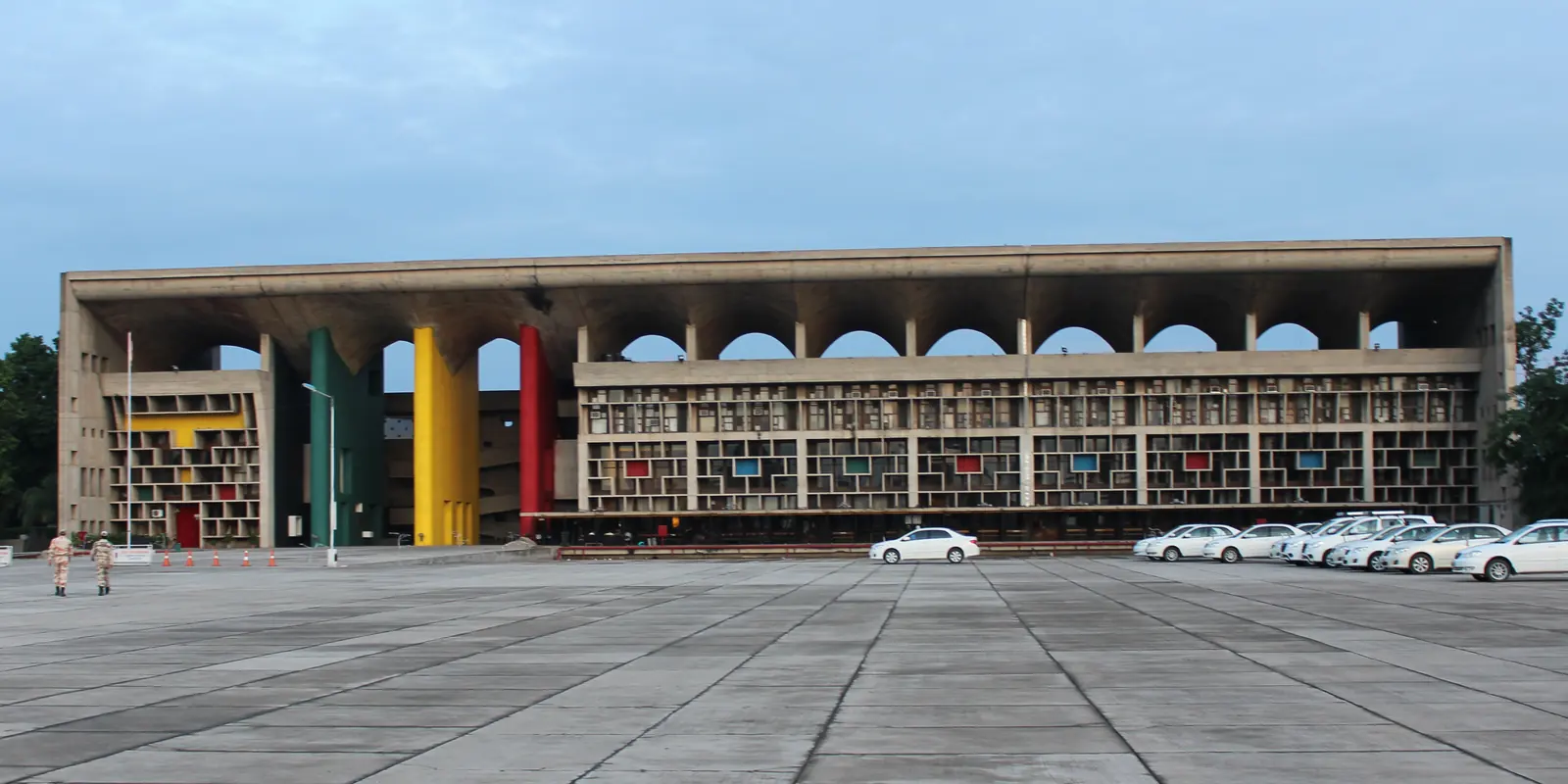
- Seat
- Chandigarh, since 1955
- Jurisdiction
- Punjab, Haryana and UT Chandigarh
- Sanctioned strength
- 85 judges
- Building
- Palace of Justice, by Le Corbusier
History in brief
21 March 1919
The High Court of Judicature at Lahore is established, with jurisdiction over undivided Punjab and Delhi.
15 August 1947
After Partition, the High Court of East Punjab is set up under the High Courts (Punjab) Order, 1947. It sits at Peterhoff in Shimla.
26 January 1950
With the Constitution in force, the court becomes the High Court of Punjab.
17 January 1955
The court moves to Chandigarh, into the Palace of Justice designed by Le Corbusier.
31 October 1966
A separate Delhi High Court is constituted. Delhi, served by this court since 1947 and by a circuit bench from 1952, leaves its jurisdiction.
1 November 1966
After the reorganisation of Punjab, the court becomes the High Court of Punjab and Haryana, serving both states and the new Union Territory of Chandigarh.
July 2016
The Capitol Complex, which includes the High Court, is inscribed as a UNESCO World Heritage Site as part of "The Architectural Work of Le Corbusier".
The court today
The sanctioned strength is 85 judges: 64 permanent judges, including the Chief Justice, and 21 additional judges. The court hears writ petitions, criminal and civil appeals, bail and quashing petitions, and appeals from tribunals across Punjab, Haryana and Chandigarh.
Matters the chamber handles here
Utilities for this court
Practical guides for people with a matter in the High Court will be added here.
Cause list guide
How to find your case on the daily list and read it.
Coming soonCase status walkthrough
Checking the stage of a case and the next date.
Coming soonUrgent listing and mentioning
When and how a matter can be heard urgently.
Coming soonHolidays and vacations
Court working days and vacation benches.
Coming soon
Questions about a High Court matter?
New Bar Room Extension, High Court, Chandigarh